From the sorrowful tale of Philomela in ancient Greece to the amorous dance with the rose across Eastern poetry, the nightingale has long been a symbol of longing—a call that pierces the stillness of night with its poignant narrative of love and loss.
The nightingale’s timeless song has soared through the ages, each note a heartbeat in literature and each trill a permanent mark on the pages of musical history. Its voice, at once both a whisper and a cry, has resonated through the ornate halls of the Baroque, the grand theaters of the Romantic era and beyond, echoing the human condition in a symphony of endless melodies.


A SONG THAT INSPIRED A STORY
In “The kiss of the Nightingale,” Cleodora becomes Lutèce’s Nightingale, a name both befitting her new role as an opera singer, and on a deeper level echoing the tale of longing and desire that is woven through her story.


Cleodora longs for a a place in the world.
She longs to have a voice.
And she longs for love, for passion, for desire.

THE NIGHTINGALE AND THE ROSE
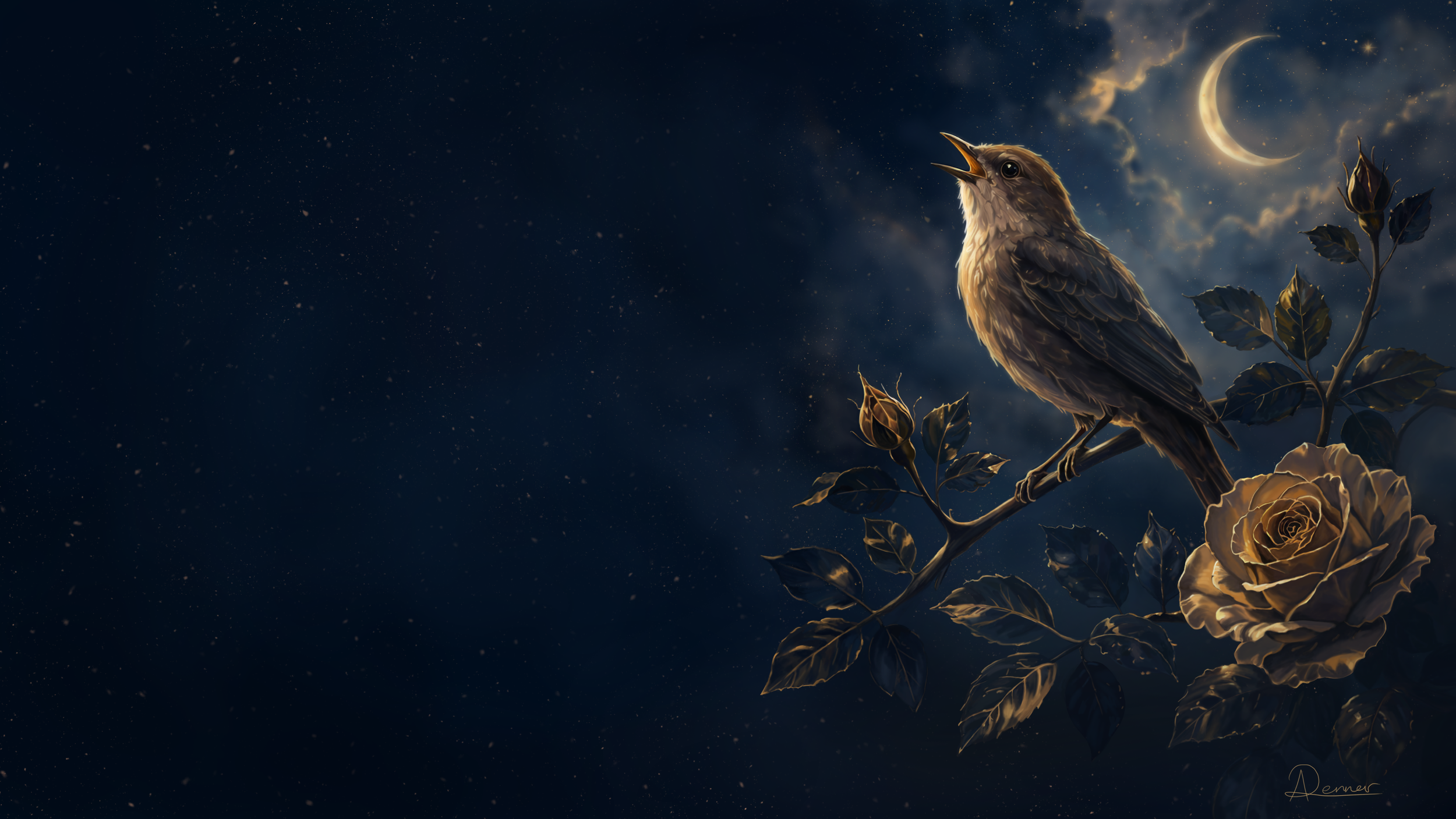
The old poems of love between the nightingale and rose were a great source of inspiration for me. This ancient story, tells of the nightingale, forever captivated by the rose’s fleeting beauty. Night after night, under the moon’s watchful eye, the nightingale serenades its beloved, pouring its heart into melodies that speak of an undying love. Yet, this love is as unattainable as the first light of dawn, for the rose, in its silent grace, cannot echo the nightingale’s fervent call. This dance of desire and despair, of blooming and withering, captures the soul’s eternal quest for the divine, painting a portrait of love that is as exquisitely unfulfilled as it is endlessly alluring.
Through the generations countless composers attempted to capture its essence within their musical creations. We can see direct and explicit examples of composers trying to imitate its melodies and integrate them into their works as early as the time of the Renaissance and Baroque periods. They used the nightingale as a symbol of natural beauty and artistic inspiration and it’s virtuosic nature as the epitome of technical musical expression to strive toward. This trend continued into the Classical and Romantic eras, with the nightingale motif finding its way into both instrumental music and vocal compositions.
In the realm of lieder (German art songs), the nightingale's symbolism was often intertwined with themes of nature, romance, and existential reflection. Composers like Franz Schubert and Johannes Brahms crafted songs that utilized the nightingale motif to evoke specific emotional landscapes, using the bird’s song as a metaphor for the human condition.
Opera, too, has been a fertile ground for the nightingale’s symbolic presence. From early works like George Frideric Handel’s "Rodalinda" to more modern operas, the nightingale has been featured both as a character and as a symbol. In Igor Stravinsky’s "The Nightingale," for example, the bird is not only a central character but also represents the idea of transcendent art that surpasses even the greatest human achievements.
Ludwig van Beethoven also famously paid homage to the nightingale in the second movement of his "Symphony No. 6," known as the "Pastoral Symphony," where he creates a dialogue between the nightingale (represented by the flute), the quail (oboe), and the cuckoo (clarinet), celebrating the pastoral and idyllic scenes of nature.
This tale of the nightingale and the rose has seen many evolutions throughout the ages and in a way Cleodora’s story is a modern interpretation of it.
HOW DOES THE NIGHTINGALE APPEAR IN CLASSICAL MUSIC?
The nightingale’s enduring legacy in classical music is a testament to its unparalleled capacity to inspire, console, and transcend, echoing the timeless pursuit of beauty and truth through the art of sound.

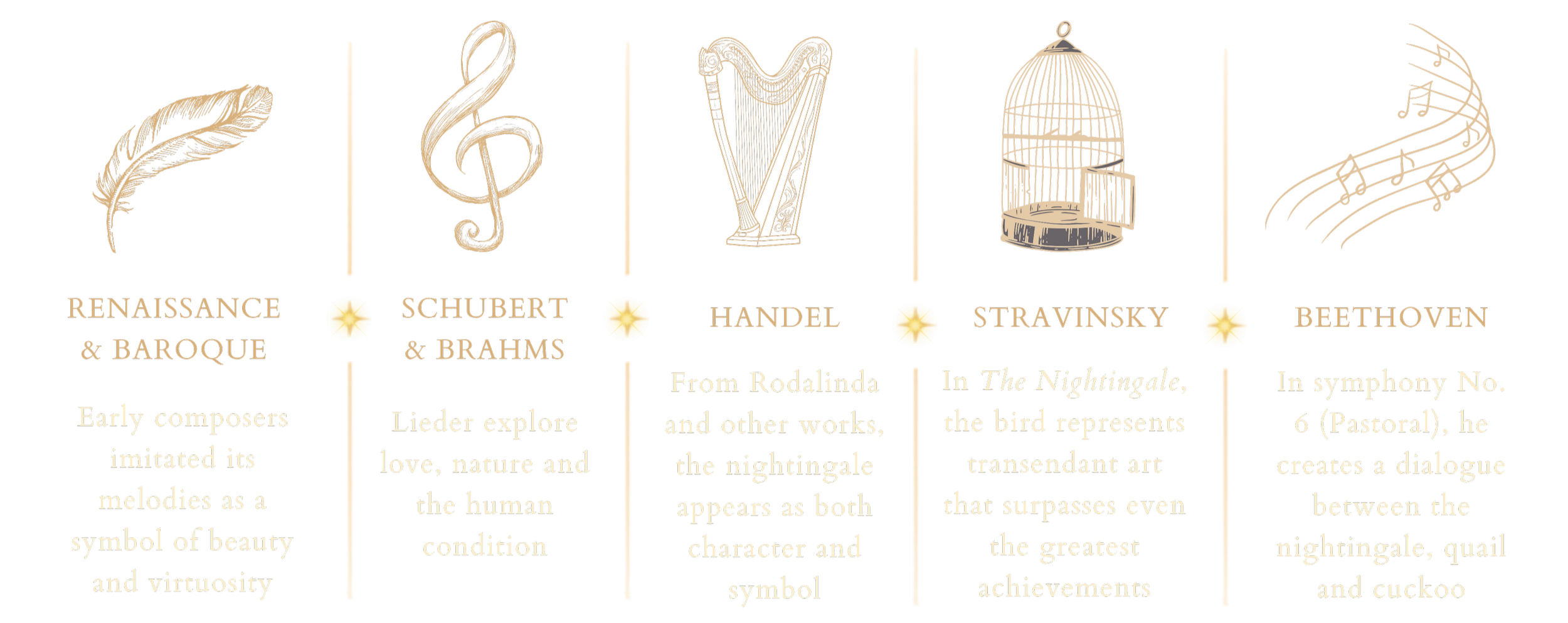
From the Renaissance to today, composers have tried to capture the nightingale’s magic in every note.


EXPLORE MORE

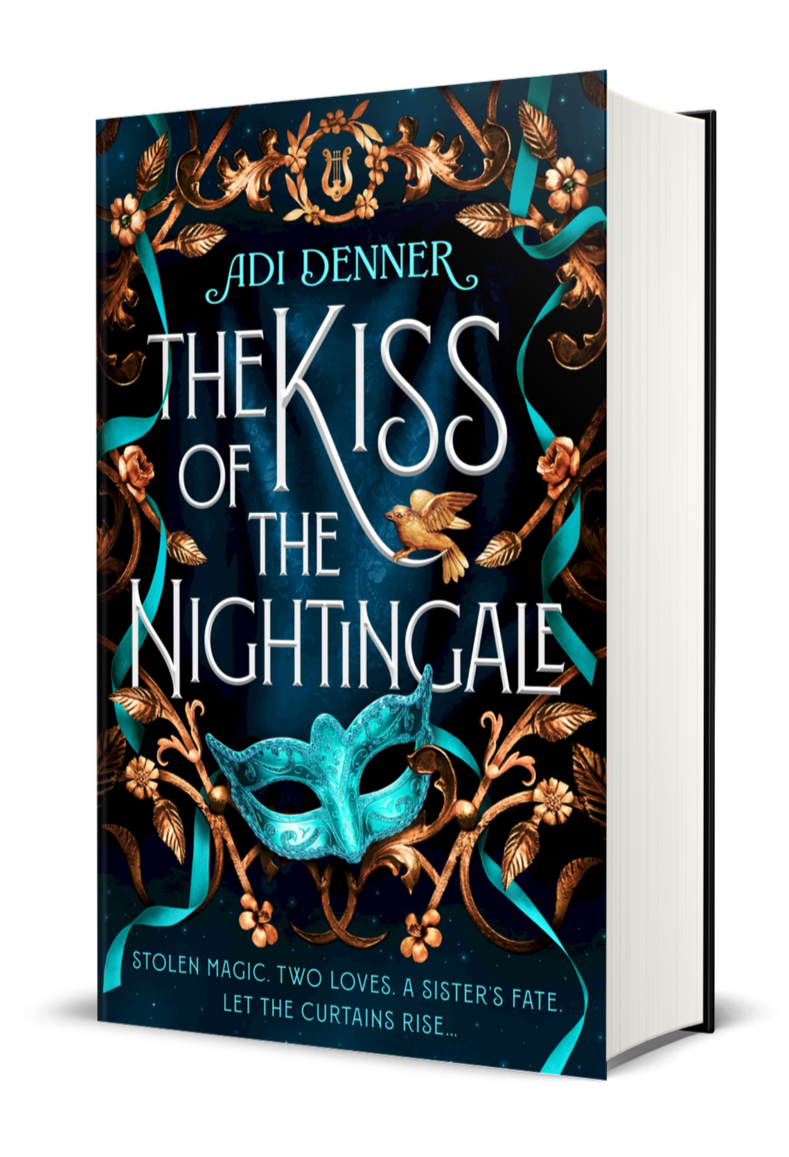
An ordinary girl suddenly transforms into an opera diva must navigate stolen magic, impossible expectations, and two very different loves.
MEET CLEODORA